 |
| Islas San Andrés, Colombia |
Coastal erosion is a natural process that occurs when wave crash against the shore; however, there are some things that can cause an increase in erosion in certain areas like the type soil of the shore, the rising sea level because of global warming, and the level of human development in that area. At times erosion can be very dangerous and costly for people living near areas affected by this issue. In the photo above, the erosion in the San Andrés Islands of Colombia has almost overtaken the road next to the shore. Many roads, homes, restaurants and other establishments built next to the coast are in danger of loosing their property to the sea. In the picture below you can see a restaurant in Ciénaga, Colombia that has been affected by the costal erosion.
 |
| Ciénaga, Colombia |
According to a study done by the Institute of Hydrology, Meteorology, and Environmental Studies (IDEAM) from 2017, the Caribbean regions of the Guajira, Magdalena, and Cordoba registered more than 70% of their coastal area with some grade of degradation by erosion.
 |
| Salgar, Colombia |
When waves crash on the shore they hit from an angle. This can cause earth to be carried away to another location. This is how shorelines naturally change, but when human development occurs along the coastline,this changing of the shoreline can cause loss to property and even life. In Salgar, Colombia a project is under way to build jetties to preserve the coastline. Jetties work to help fight the affect of this phenomenon. The figure below demonstrates how this works.
 |
| Mangrove Trees |
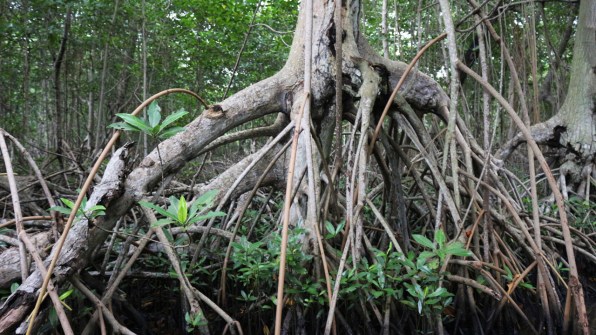
Another project under way on the Caribbean coast of Colombia sponsored in part by Apple along with Colombian communities collaborating to protect and restore the Mangrove forests. These forest can help combat erosion because the submarine roots trap the earth and keep it from washing away. In addition to this, Mangroves can help in the fight against global warming. These trees are capable of absorbing carbon emissions 10 times more than terrestrial trees storing it in their leaves and branches, but unlike other trees, they also push it down into the ground through their under water roots. The only downside seems to be that if these trees are destroyed they release carbon emissions saved for centuries.
 |
| Bay of Cispatá, Colombia |
Sources:


Good research this week. Can you please add your sources of information in here, I'd like to read more about it.
ReplyDeleteYes thank you for the reminder!
ReplyDeletethank you.
ReplyDelete